How to prepare a safe campfire
A campfire can turn a simple evening outdoors into something special. The best preparation starts before the first spark: choosing the right place and knowing when to leave the matches in your pocket.
Here is how we approach a small campfire in Sweden, from checking the rules to leaving the site ready for the next visitor.

Photo: William Hadley on Pexels. A campfire detail, rather than a demonstration of a suitable fire site.
1. Check whether a fire is allowed
Sweden's right of public access is not an automatic right to light a fire. Check the current municipality or county fire ban and the rules for your park or reserve. Restrictions may cover designated fireplaces too. If it is dry, windy or you cannot control the fire safely, choose a meal that needs no flame.
2. Choose the fire site
Use an existing designated fireplace wherever possible, if the current rules allow it. For a new site, obtain any needed permission and use suitable bare sand or gravel. Avoid moss, peat and forest soil, which can smoulder below ground, and never burn directly on exposed rock. A stone ring does not make an unsuitable spot safe.
Keep your shelter and equipment away from sparks. Use the site as intended; do not enlarge an existing hearth or leave a new permanent structure behind.
3. Get everything ready first
- Enough water for extinguishing, with a container ready beside you
- A small shovel for stirring and checking the ashes
- Dry, suitable firewood, tinder and small kindling
- A lighter or matches, plus a backup
- A clear plan for where people will sit and how you will pack up
Bring suitable fuel or use loose dead material where permitted. Do not damage living trees or burn rubbish.
4. Start small
Place a little tinder in the hearth with fine kindling loosely above it, leaving space for air. Light the tinder, then add slightly larger pieces only when the kindling is burning steadily. Build the fire gradually rather than loading it with large logs straight away. Never use petrol or other accelerants.
Keep it small, watch the wind and stay beside it. If sparks start reaching dry material, stop adding fuel and put the fire out.
5. Finish the evening properly
Stop adding wood well before you plan to leave. Douse the remains with water, stir, check beneath the ashes and repeat until everything is cold with no smoke. Do not bury hot embers. Never leave a fire unattended; if it spreads, move to safety and call 112.
Collect your rubbish and food scraps. Pack cooled equipment away and leave the fireplace tidy. A final look around should be part of every camp.
Build your camp skills
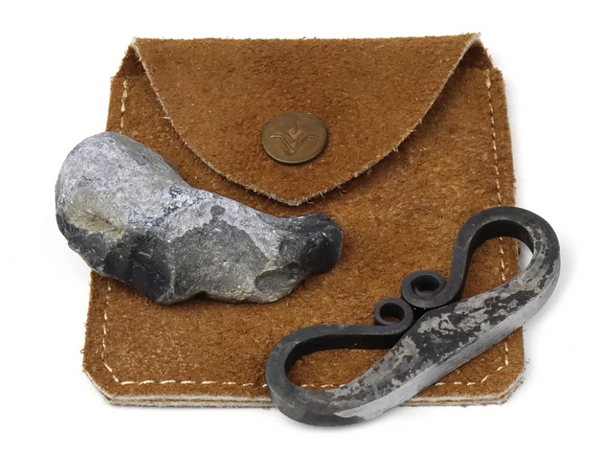
A fire starter is only one part of the kit. Knowing the conditions and having water ready matter more than any piece of gear. Browse our outdoor tools, or learn how to pitch a simple tarp shelter.
Read before your trip
This guide follows Naturvårdsverket's advice on lighting fires and the Swedish Civil Contingencies Agency's fire safety guidance. Always check the latest local restrictions for your destination.